

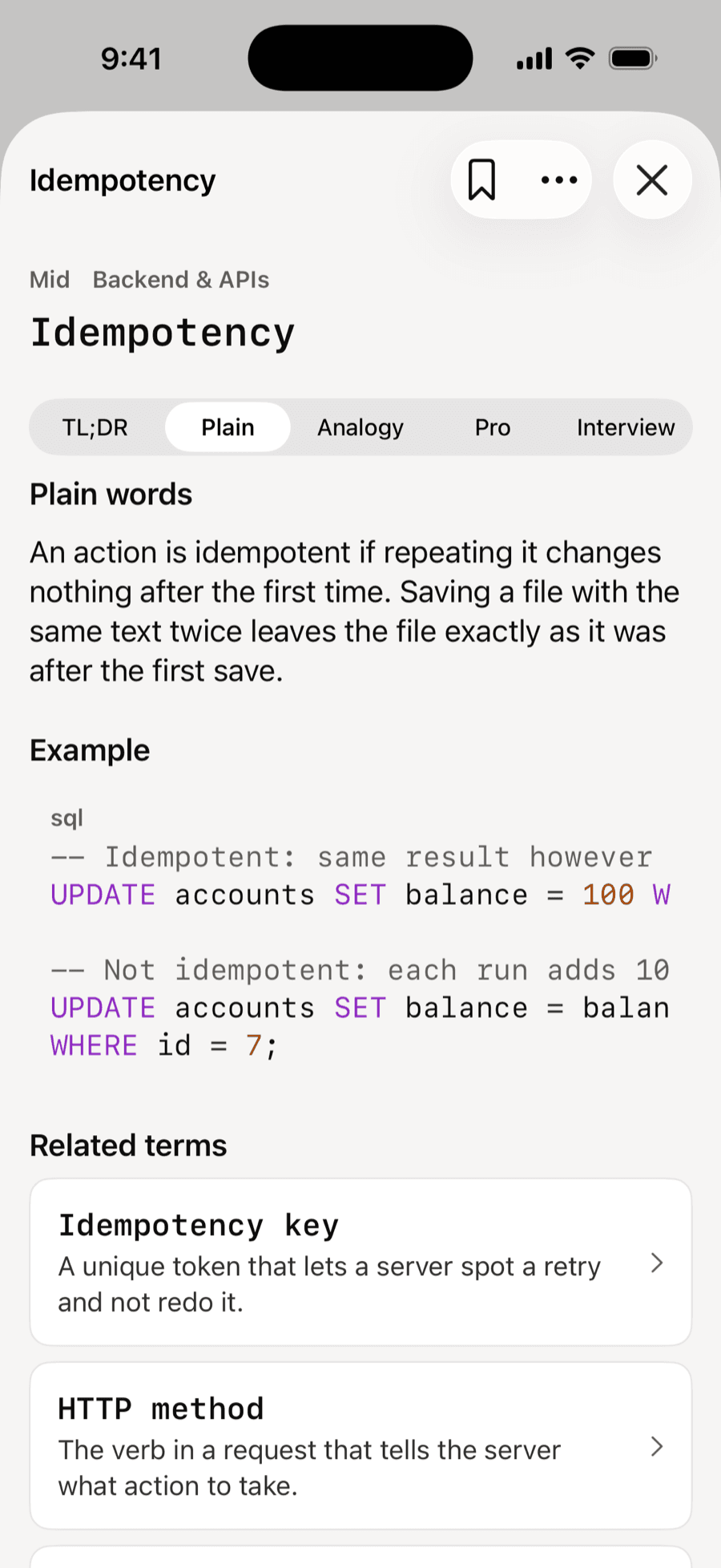
TL;DROne line, sized for the Lock Screen.
Repeating the action leaves the same result as doing it once.
{Idempotency}
 Coming to iPhone
16,252 software terms, each explained five ways, right on your Lock Screen.
Read the one-liner at a glance. Scroll on when you want the whole idea.
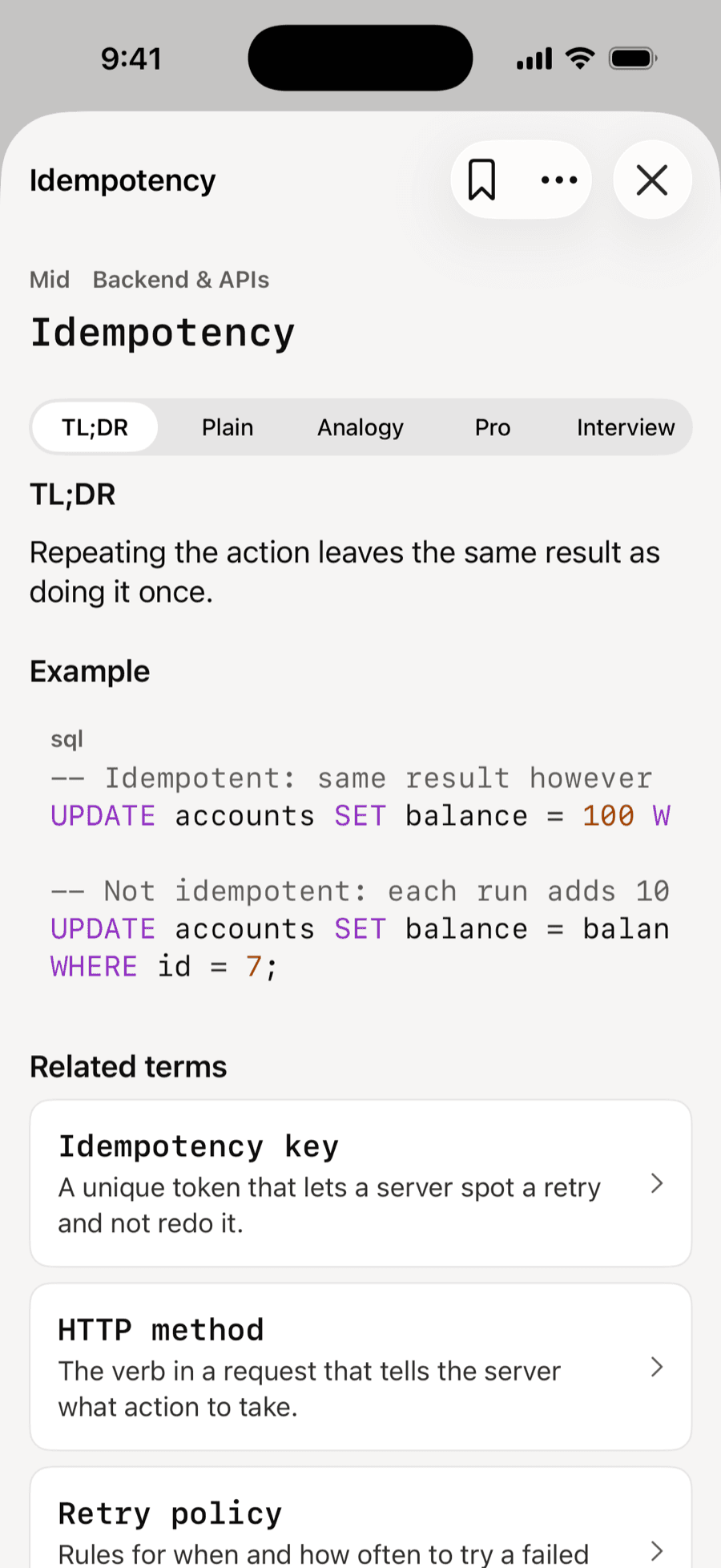
Repeating the action leaves the same result as doing it once.
An action is idempotent if repeating it changes nothing after the first time. Saving a file with the same text twice leaves the file exactly as it was after the first save.
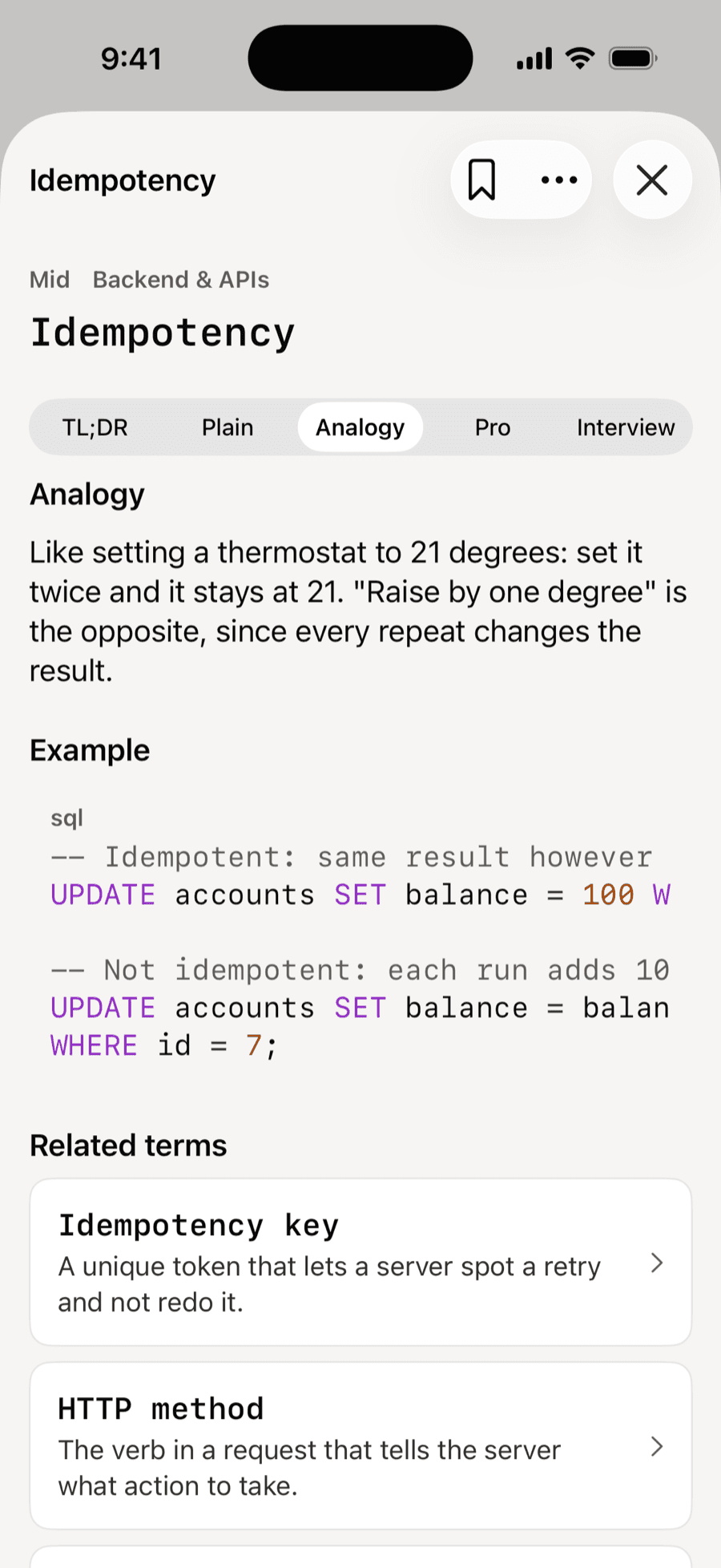
Like setting a thermostat to 21 degrees: set it twice and it stays at 21. "Raise by one degree" is the opposite, since every repeat changes the result.
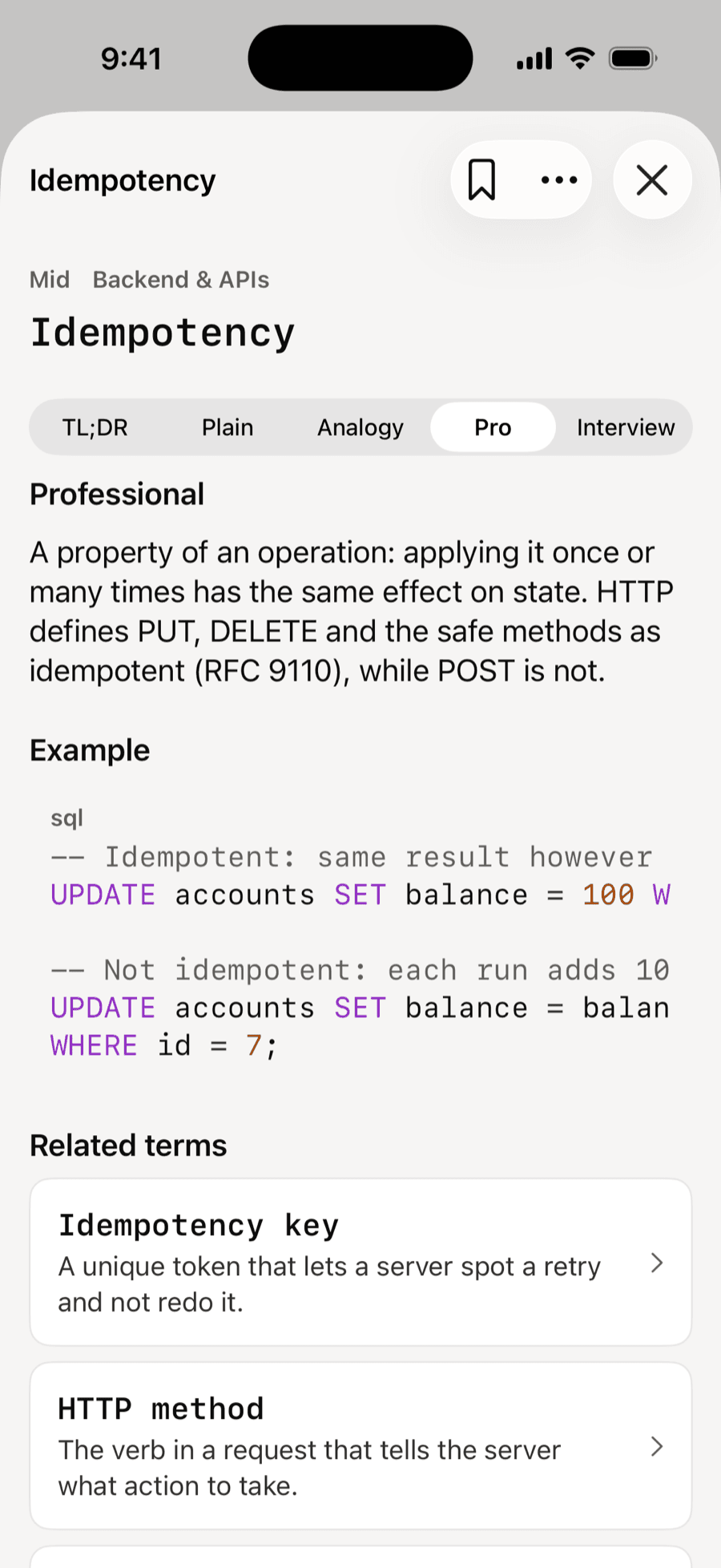
A property of an operation: applying it once or many times has the same effect on state. HTTP defines PUT, DELETE and the safe methods as idempotent (RFC 9110), while POST is not.
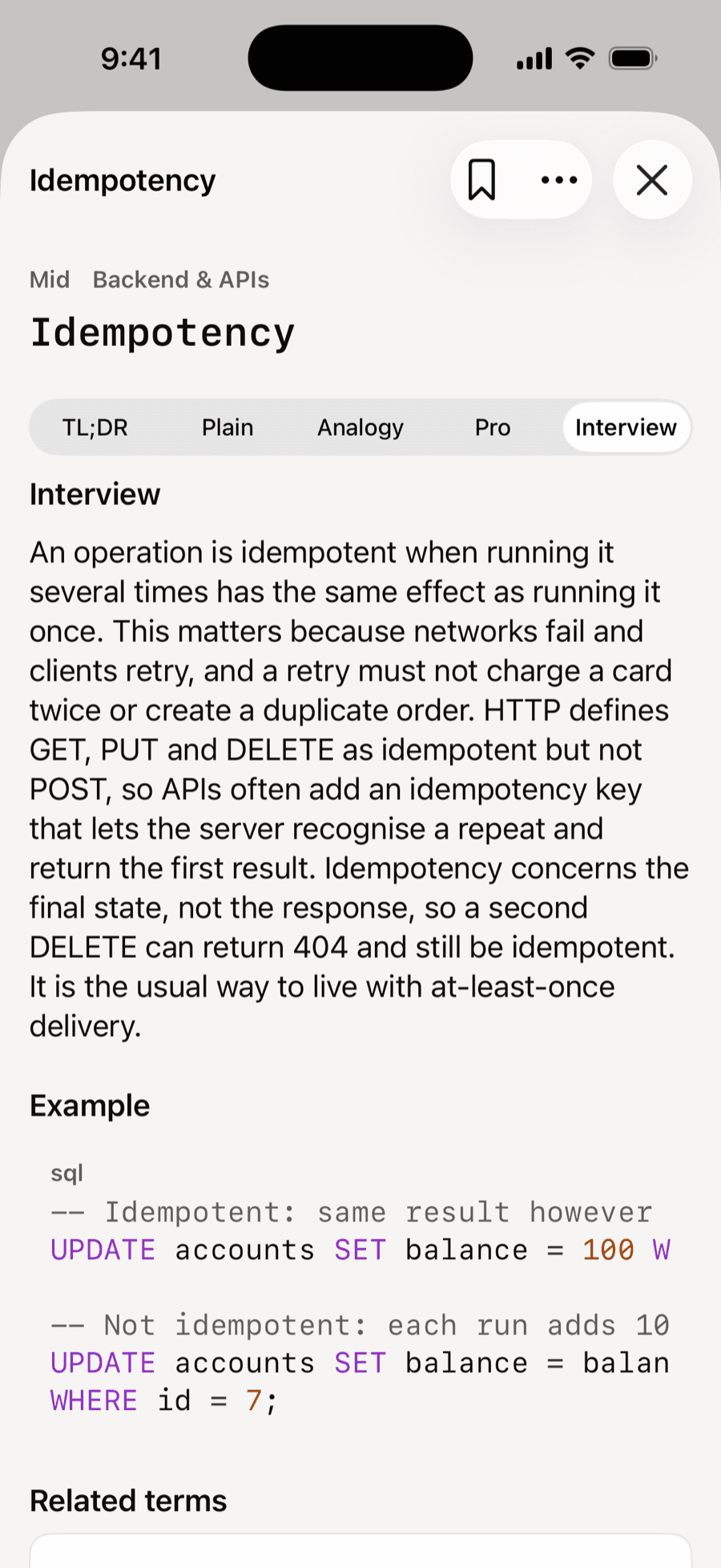
An operation is idempotent when running it several times has the same effect as running it once. This matters because networks fail and clients retry, and a retry must not charge a card twice or create a duplicate order. HTTP defines GET, PUT and DELETE as idempotent but not POST, so APIs often add an idempotency key that lets the server recognise a repeat and return the first result. Idempotency concerns the final state, not the response, so a second DELETE can return 404 and still be idempotent. It is the usual way to live with at-least-once delivery.
-- Idempotent: same result however often it runs
UPDATE accounts SET balance = 100 WHERE id = 7;

-- Not idempotent: each run adds 10 more
UPDATE accounts SET balance = balance + 10
WHERE id = 7;
Idempotency key, HTTP method, Retry policy, At-least-once delivery, Idempotent consumer, Exactly-once delivery
You pick up your phone dozens of times a day. Lexicode makes some of those glances count.
A new term every time you look. Pick each widget’s source and style.
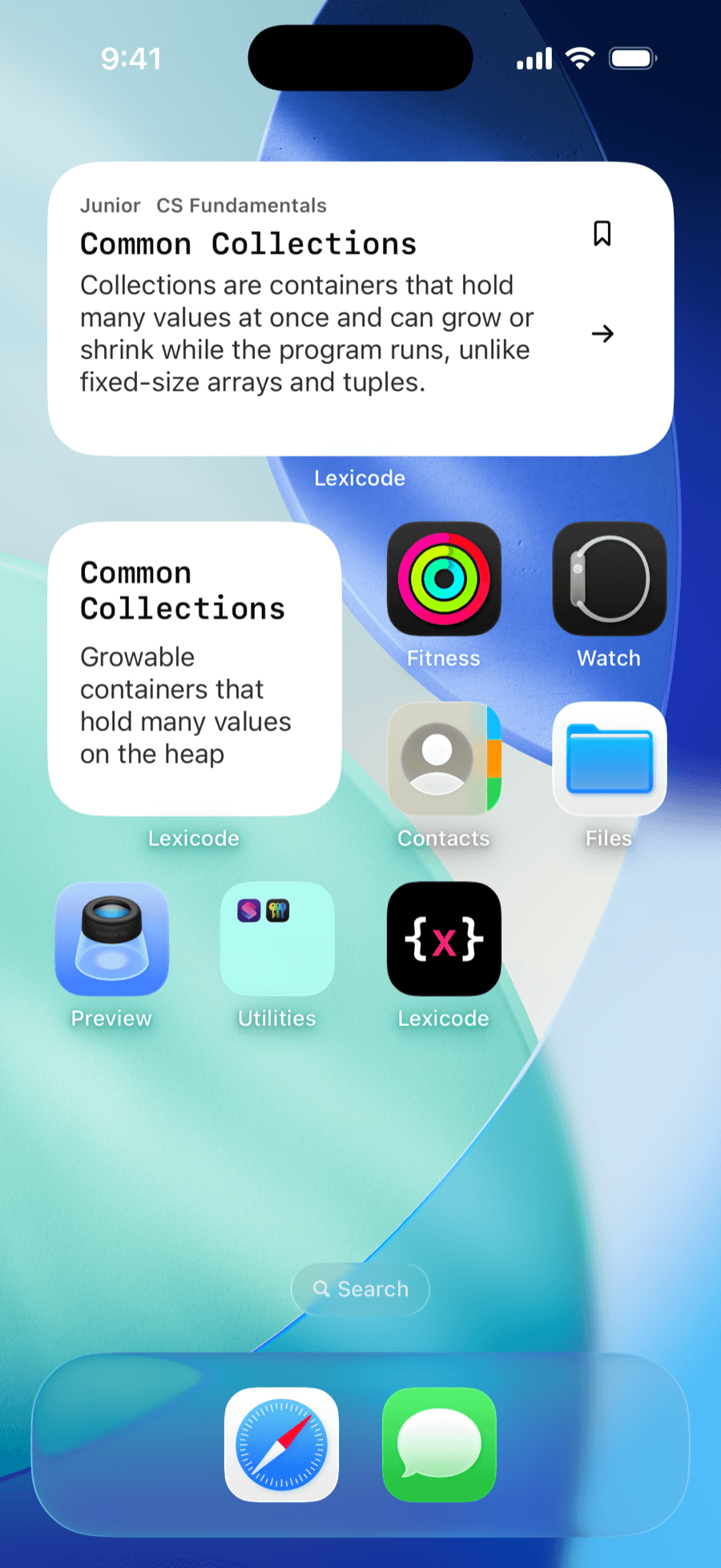
A Lock Screen with the Lexicode widget showing Feature flag and its one-line meaning.
A term and its TL;DR at the times you pick.

Your feed brings them back so they stick.
Search all 16,252 terms by name. Filter by level and specialisation.
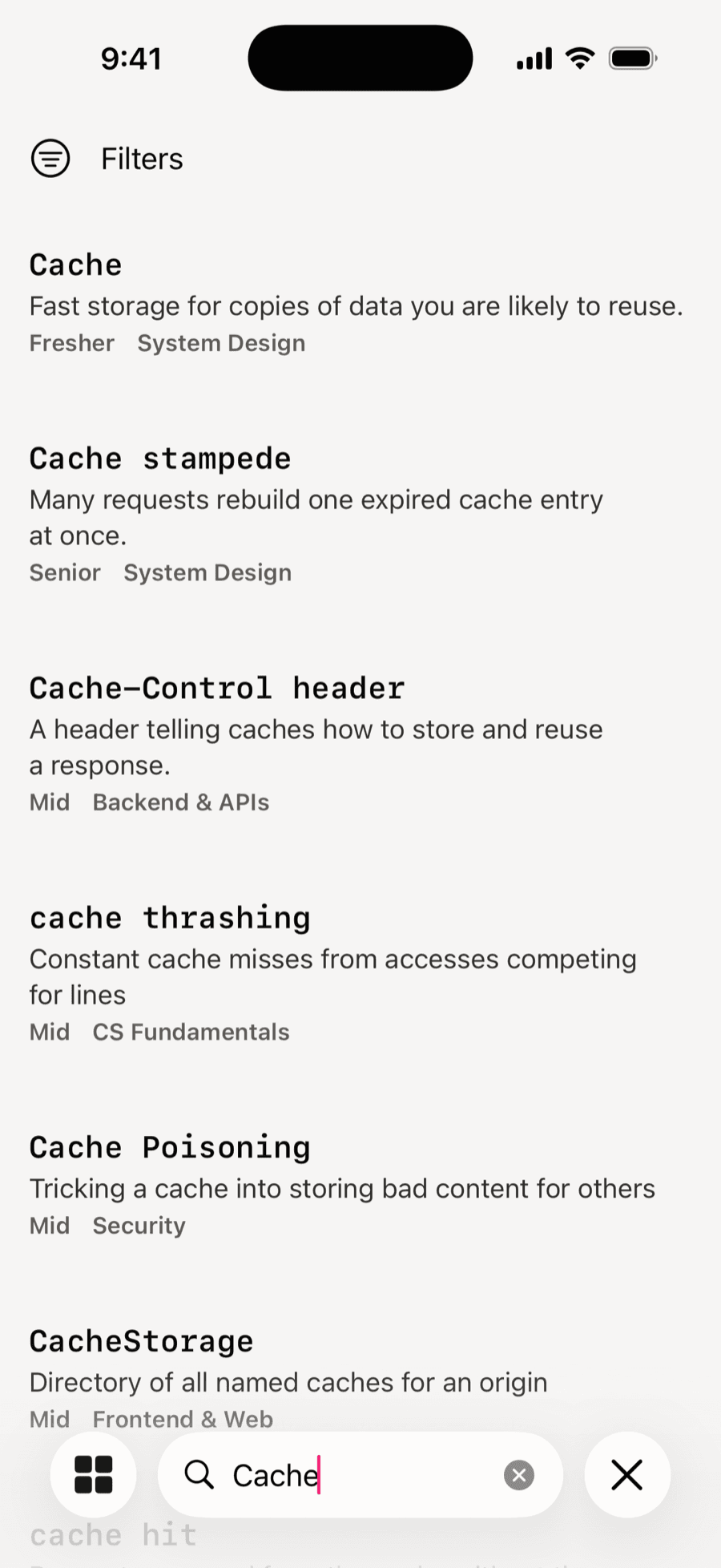
Pick how many terms a day. Keep the streak going.
Every term has a level and a specialisation, so you start where you are.
Every term is written for engineers, checked against an authoritative page, and links to it.
The most cited sources: en.wikipedia.org, nist.gov, developer.mozilla.org, developer.android.com, developers.google.com, kubernetes.io, learn.microsoft.com, martinfowler.com, docs.python.org, rfc-editor.org.
Every card cites its source.
One tap opens the page it was checked against.
Corrections arrive on their own.
New and fixed terms reach the app without an update. Spot a mistake? Report it from the card.
Your progress stays yours.
On your iPhone and in your own iCloud. No account to make.
Something else? Write to us.
Soon, on iPhone. Join the waitlist and we’ll send you one email on launch day.
Any iPhone running iOS 26. There is no iPad or Android version yet.
Students and new engineers learning the vocabulary, engineers preparing for interviews, and designers, product managers and managers who want to follow the conversation.
Each term is written for engineers and checked against an authoritative source, such as NIST, MDN, ISTQB or an IETF RFC. Every card links to the page it was checked against.
Prices are set for each country in the App Store, and the app shows yours before you buy. The yearly plan starts with a 7‑day free trial. CS Fundamentals and one specialisation stay free.
No. Your saved terms and progress stay on your iPhone and in your own iCloud.
We use it once, to tell you Lexicode is out, and delete the list within 30 days of launch. Read the privacy notice.

Join the waitlist and get Lexicode on launch day.